I’m not much of a betting man, but here’s something I’d lay
money on: close your eyes, point your finger to a map of the continental United
States, head immediately to the nearest dive bar, and whatever random ragged
band is playing there will offer more spirited renditions of “You Never Can
Tell” and “Dead Flowers” than these lazy bums, coasting into a new contract
with MCA that must have just thrilled
the suits. Truly, this is one of the most phoned-in albums I’ve ever heard,
major label or self-released. Not for one flickering instant does it spring to
life; they don’t write songs (there’s one paltry original, and it ain’t much to
speak of), and the otherwise all-covers track listing seems mostly chosen to
allow Skip Battin to do nothing but ride bass scales for a whole LP. Nobody
else does anything, either; there may be legitimate metaphysical questions as
to whether this album even exists. God knows I can’t vouch for it, and the damn
thing is playing as I type.
Showing posts with label Skip Battin. Show all posts
Monday, November 4, 2013
Saturday, September 28, 2013
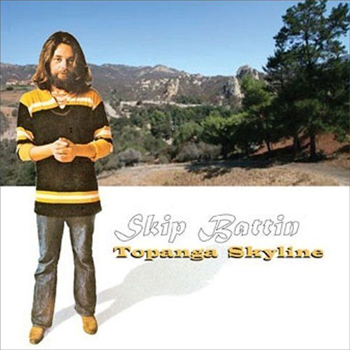
Skip Battin, Topanga Skyline (2012)
The mind boggles at the thought of hardcore Skip Battin fans—what
is there to love, exactly, beyond Kim Fowley songs sung by someone other than
Kim Fowley?—but they exist, at least two of them, contributing liner notes from
France and Italy to contextualize this unreleased album from 1973, apparently
lost during the petroleum crisis and finally recovered nearly four decades
later.
As far as ecologically-debilitating uses of world resources
go, slapping this on vinyl would have been better than refueling another
gas-guzzling American car, but not by too much. Battin does drop some of his
unendearing novelty-tune shtick and attempt to deliver a genuine roots-rock LP;
it’s credible enough, but still no better than a set of non-Fogerty CCR tunes. Credit
where credit is due, though: in “Wintergreen,” Battin and Fowley unexpectedly
knock out a real song, full of genuine emotion. It’s certainly their high point
to date (and the closing bonus track “China Moon,” taken from later sessions,
might also come close, were it not for some questionable racialized lyrics). Otherwise,
mostly this just leaves one with questions, such as, does this mean there are
also Gene Parsons obsessives out there? John York ones?
Wednesday, July 3, 2013
The Byrds, (Untitled) (1970)
Untitled and also seemingly rather unsung, but a remarkably
strong album with an adventurous format: double-LP, first one live, second new
studio tracks. They bring the muscle for the live stuff, with a set spirited
enough to reclaim even the doofy “Mr. Spaceman” from its 5th Dimension doldrums. “Lover of the Bayou,” one of
McGuinn’s last strong originals, opens things—live rather than studio was the
right call—and an entire sidelong “Eight Miles High” avoids feeling like one of
those awful San Francisco jam bands stretching out aimlessly in some poor
ballroom; these guys hammer ferociously.
The studio material contains more solid McGuinn/Levy
compositions (“Just a Season” especially), and balances nicely against the live
record. The Skip Battin/Kim Fowley songwriting machine that would irreparably
mar the next two Byrds albums begins to seep in here, but is held slightly in
abeyance by the fact that McGuinn takes the mic, and these actually sound like
rock songs and not irritating novelty tunes—though the concluding “Well Come
Back Home” drones on twice as long as it should.
Tuesday, June 4, 2013
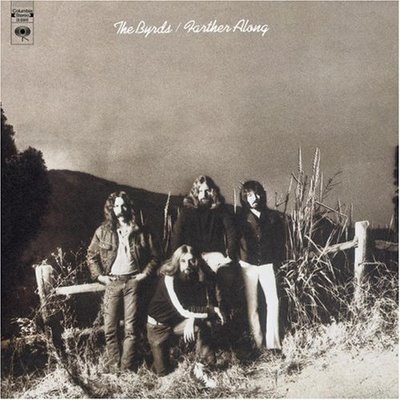
The Byrds, Farther Along (1971)
Timing and production, they matter: I could see
this ramshackle album recorded on a four-track in 1996 getting some underground
traction, and I could see it slathered in Byrdsmaniax
overdubs, coming out in 2007 on Sub Pop as a Fleet Foxes opening act. Recorded
near-live in 1971, right after the aforementioned flop, it too wilted on the vine. If not a lost masterpiece, it still
deserved better, as Gene Parsons and Clarence White really showed themselves
the center of the group, Roger McGuinn overcame his lifelong songwriting stupor
to kick things off with the self-penned chugging 50s-style riffage of “Tiffany
Queen” (one of the most overlooked Byrds gems, with even modestly clever lyrics
from Our Man of the Norman Vincent Peale Reading Club), and the wretched
Skit Battin/Kim Fowley songwriting duo pushed their obnoxiousness into relative
remission here. We even get a moving dead-dog tribute.
Probably this was all they had in them and it’s just as well
the road ended here (it’s the final LP in the organically continuous life of
the Byrds, with the 1973 original-lineup return a reunion rather than a next-album). But the thing deserved better
than the critical and commercial neglect it received—even the bonus tracks on
the CD reissue kinda kill it.
Saturday, June 1, 2013
The Byrds, Byrdmaniax (1971)
The near-universal consensus is that producer Terry Melcher
killed this album by drowning it in sickly sweet strings and horns. Which gives
him both too much and too little credit; okay, he lays it on thick, no
question, but this was bound for mediocrity no matter who tweaked the knobs.
Nothing could polish these tunes into gold, nor does Melcher entirely stifle what is
there; McGuinn’s gentle but simple “Kathleen’s Song” was going to be
endearing but forgettable whether or not swirling symphonic fills were crammed
into its open spaces.
That and the Gene Parsons co-write “Pale Blue” are the
fearless leader’s most—only—valuable
contributions (the less said about his faltering stab at political commentary,
“I Wanna Grow Up To Be a Politician,” the better; on his go-to co-composer
Jacques Levy, let even less be said). Team Battin/Fowley can’t compete with
even that, turning in more of the lazy pap that marked Battin’s Byrdsian
contributions. Clarence White moves behind the mic for a few songs, credibly
enough, though surely even the young Jackson Browne had better offerings for
him to cover than “Jamaica Say You Will.”
At least they were smart enough to leave off the
once-requisite Dylan cover that traded in and simplified the complicated
sneer/sorrow combo of “Just Like a Woman” for a more straightforwardly
sentimental version that thus missed the point. Otherwise,
all the markings of a slapdash contract filler are here, including the goofy,
unappealing cover and title. Ladies and gentlemen, this is what uninspired
journeyman rock music feels like.
Saturday, May 11, 2013
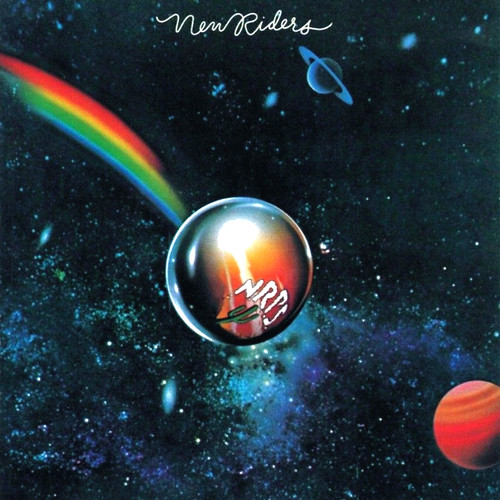
New Riders of the Purple Sage, Brujo (1974)
When I was a teenager, punk songs about how the only good
Deadhead is one that is dead were my idea of clever songwriting. Then I grew
up, got more boring and/or less dogmatic, and reluctantly conceded that at
least American Beauty and Workingman’s Dead are better than 85% of all punk albums.
Even still, the idea of volitionally listening to a Dead spinoff
seemed beyond the pale, but here I am, rocking some New Riders solely on
account of Skip Battin’s presence in the band (begun with this album, their
sixth). Battin was arguably the third least essential Byrd, after passing
bassist John York and mediocre drummer Michael Clarke, but completist tendencies are ugly
things.
It’s not bad, the album. The first side, in particular, rides a mellow
stoned country groove through a spirited rendition of Bob Dylan’s “You Angel You” (from which Roger McGuinn in 1974 could have taken a cue or two, given his lifeless covers of the era) and the great standard “Ashes of Love,” along with singer John Dawson’s “Instant
Armadillo Blues,” whose tale of “going down to Austin” to watch the armadillos could have come straight off the pages of a Tom Robbins novel. Then Battin and songwriting
partner Kim Fowley take over side 2 and grind things to a halt with more of the
simplistic novelty songs that they had already dumped on several late-period
Byrds albums. Considering that the New Riders were cranking out multiple albums
per year at this point, I suppose the stakes were low and consequences small.
But still, Battin doesn't add much to the group except song-quantity--which probably counted for something given their prolific output.
Sunday, March 31, 2013
The Flying Burrito Bros, Airborne (1976)
The sole point of interest here is the head-scratcher
question of how a group of scraggly, skeevy, second-tier country-rockers
managed to convince Stevie Wonder to take time off from his astonishing run of
1970s albums to sit in on piano for an inert rendition of his own “She’s a
Sailor.” Otherwise, it’s modest, unremarkable stuff through and through. The
Byrds presence has doubled from the last LP; Gene Parsons is now joined by Skip
Battin, meaning the Burrito Bros have now perversely replicated the earlier
band’s personnel shifts of the last decade, with the Hillman/Gram
Parsons/Clarke lineup giving way to the late-Byrds rhythm section—and the accompanying decline in quality. I suspect this also
speaks to the insularity of the mid-decade country-rock scene; apparently Richie Furay was busy this year. But it’s all harmless
enough, and they seem to be having fun, so it’s as difficult to resent this as
it is to remember it ten minutes later.
Wednesday, March 20, 2013
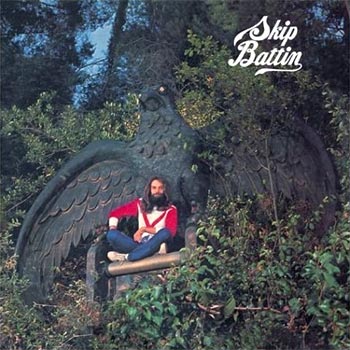
Skip Battin (1972)
Skip Battin was the Slim Dunlap of the Byrds, joining just
in time to ride out the band’s decline. He wrote a few songs on the final few
albums, often with cinematic themes; nothing too subtle (cf. “Citizen Kane”),
nothing too memorable. I actually like Dunlap’s halfway decent solo albums
more; Battin’s s/t 1972 solo debut is basically akin to the originals a
moderately talented C&W bar band in Topeka plays between covers. The film
stuff continues with “Valentino,” and beats the sports stuff like “The St.
Louis Browns,” but absolutely nothing sticks. All the songs are co-written with
crackpot loony Kim Fowley, but it doesn’t matter; “Captain Video” aspires to
breathless wordsmithery but peaks with “sexual intellectual.”
McGuinn and another Byrd or two show up, but mostly this
reminds me of old novelty flexi-discs like the one my dad used to play for my
mom on her birthday each year, with a thin-voiced singer crooning about coming
from the moon just to sing her a tune. A+ cover art, though.
Subscribe to:
Comments (Atom)