Showing posts with label Chris Hillman. Show all posts

Sunday, December 3, 2023

Ever Call Ready, s/t (1985)


When rock bands like the Byrds pick up devotional music, the devotion plays as more to the music than to Jesus. And on that level, Chris Hillman and the boys (including one of the Eagles and etc.) getting together for a hootenanny has an undeniable near-beer charm, all affectionate conversation between banjo and dobro, singing out His praises, and even sliding in some front-porch Beach Boys harmonies in “On the Sea of Life.” A rousing, minor good time for one and all. 

Until you realize, they mean it. Or at least, Hillman does. I’m not sure whether other Ever Call Ready members took positions against same-sex marriage equality or aligned themselves with Ted Nugent politically, but this reactionary turd did both. Whatever beauty and joy can be heard in the great gospel tradition is supplanted by the sour note of what sounds like a Jerry Falwell screed in “Don’t Let Them Take the Bible Out of Our School Rooms,” an old Louvin Brothers chestnut that lands with a thud in the age of the Moral Majority (it was trash in 1962 too, the year the Supreme Court gave school prayer the boot in Engel v. Vitale). I half expected a song called “Is the School House the Proper Place to Teach Raw Sex?” They look awkward on the front cover in their clearly unworn jeans, but don’t let the dorky charm fool you; these are the false prophets the guy they claim to worship warned about.


Saturday, August 29, 2020

Chris Hillman, Morning Sky (1982)


In which Hillman entirely stops trying, and thereby saves himself. Having made two of the most lackluster solo singer-songwriter albums in recorded history and then been outshined on the McGuinn/Hillman project by Roger McGuinn singing about going on roller-skate dates, the guy was in some serious career doldrums. It would be another few years before the Desert Rose Band gave him a commercial reboot, but this one restored his pulse, even if a bunch of MOR covers is the lowest-octane form of resuscitation known to man. Dan Fogelberg, J.D. Souther, country-ambling Grateful Dead, a Dylan deep cut, low-key Kristofferson, and that’s just the name-brand tunes—it’s a future dollar bin condensed onto two sides of vinyl. The whole thing is mellow, amiable, and more enjoyable than you’d ever expect from the stiff, dour cover art or its location at a onetime Byrd’s lowest ebb. Closing with Gram Parsons’ “Hickory Wind” was a bad idea because it’s the only time Hillman needs to try and it sounds like he’s not trying enough and straining at the same time, but if you’ve ever thought Loggins & Messina were good but would be even better if they’d just take it down a notch and replace some session-guy licks with mandolins and dobros, this is that record, born to be background music but crafted well for the cause.


Bonus points for crediting his fine dog Heather on the back cover, and additional ones because I picked this up the last time I was at the Hollywood Amoeba, RIP to that great location.


Tuesday, March 18, 2014

Gram Parsons with the Flying Burrito Bros, Live at the Avalon Ballroom 1969 (2007)


The first impressions of this 2-disc set effectively cancel each other out: Amoeba has outdone itself with lovely packaging, full of great archival photos and two short essays, one a loving recollection of Parsons and the Burrito Bros by Pamela Des Barres, the other a nicely detailed recounting of digging through the Grateful Dead archives (for whom the FBB were opening) for these tapes, and then the desperate quest to secure rights, by Dave Prinz. But then, that title: I’m hardly here to demand a place on the marquee for Michael Clarke, but it simply misrepresents things—as the opening audio itself makes clear—to credit this to Parsons and reduce the FBB to a supporting band. For a release so committed to musical history, that’s an unfortunate concession to (admitted) market realities, and a bit of an insult to (perhaps overly sensitive) listeners.

Well, there’s also music here—though mostly, nothing crucial from the two (April 4 and 6) very-similar live sets that replaces any LP versions. The real treasures are the two demos on disc 1, especially a spare, heartbreaking “Thousand Dollar Wedding.” "Nothing crucial" doesn't mean unworthy of a listen, though--learning the story of the "old boy" line from "Hot Burrito #1" while hearing it is worth a sniffle or two. 


Wednesday, February 5, 2014

Chris Hillman, Like a Hurricane (1998)


As mushy old-man country-rock of the late 90s goes, the closing track here, “Heaven’s Lullaby,” isn’t bad—not quite a melody for the ages, but it would have been a more deserving hit than, say, that crapulent “Butterfly Kisses” song. The rest of the album suffers from the same blandness as most Hillman solo LPs—apparently he really needs a band around him to shake him from his complacency. Still, it’s never less than pleasant, and the old Searchers song “When You Walk in the Room,” which the Byrds picked up from them three decades earlier while gigging together, retains power-pop kick even as midtempo country. Hillman frequently sounds treacly and churlish—“Sooner or Later” opens by chiding a woman for wasting money “buying foolish things,” gah—but the most obnoxious thing here is the title. I know titles can’t be copyrighted, yada yada yada, but come on man, I think you might be familiar with an obscure Canadian recording artist called Neil Young? Not only is your song vastly inferior to his, but the central simile isn’t even developed in any extended way that makes it crucial. Couldn’t you just call it “Like a Tornado” instead? Like a Whipping Wind? This always annoys me, though I suppose it's better than that classic track “Wish You Were Here,” by those gods of hubris, Incubus.


Saturday, February 1, 2014

Manassas, Down the Road (1973)


Several months ago, the first Manassas album pulled off the surprising feat of forcing me to say nice things about Prig of Prigs Stephen Stills. So I approached the followup with trepidation: must I set aside my disdain yet again? I prefer to wallow in scorn. 


Well, hmm: it’s not bad. Down the Road has none of the epic sweep of the debut double-LP, coming in at a concise half-hour. The first side has some strong moments; opener “Isn’t It About Time” comes vaguely close to incisive social commentary, while a rare Chris Hillman composition, “Lies,” approximates rocking. While the second side begins to blur together, Stills is still at his best when drowned out by his large, dexterous band, and there’s an ambitious multiculturalism here, with some lyrics in Spanish (including all of “Pensamiento”). As always, Stills has little to say but a big desire to say it, though the ego sprawl is held in check by a rhythm section that knows how to assert itseslf, and it’s over before it can grate. Dig the cover art, too (though of course Stills poses himself like the lord of the table). 

Friday, January 31, 2014

Rice, Rice, Hillman & Pedersen, Running Wild (2001)


Louvin Brothers citation notwithstanding, that title wildly overstates the case; Sitting Mild comes closer to the condition of these four gents (longtime friends who first met in 1963, as Geoffrey Himes’s helpful liner notes observe), who sound as if they’re chilling on a porch together having an off-the-cuff hootenanny. I mean that as praise, though—they’re all pros, who have eased into a relaxed warmth that suffuses the whole album. Songs come and go, but the organic vibe stays cohesive, with the one glaring exception of Larry Rice’s cringe-inducing, treacly “The Mystery That Won’t Go Away” (if you’re going to sing a godawful song about JonBenĂ©t Ramsey, maybe try to at least pronounce her name right?). Hillman sings lead on about half the tracks, with the others spread around; there’s not a ton of original songwriting here, with covers ranging from the Beatles to the Louvins to Buck Owens to Hillman’s old bandmate Stephen Stills (a terrible songwriter, but nicely redeemed through performance alone on “4 + 20”), but Hillman’s “San Antone” kicks things off a strong Desert Rose Band note. 

Pretty sure anyone who listens to this knows exactly what they're in for; there's something comforting in that, though at times you almost wish for some random left-field radio-bait cameo from, say, Dave Grohl or Christina Aguilera just to throw a curveball into the mix. 


Friday, January 24, 2014

The Byrds, Preflyte (1969)


I know their artistic ambitions aspired to ever loftier terrain, but I like the Byrds* as a simple pop band, which is exactly what Preflyte delivers. Recorded in 1964, when they were just five cute, goofy young men posing on the back cover with rifles (Gene Clark, unarmed and pensive, hides behind a scrawny tree, naturally), but leaked only in '69, this delivers eleven songs in 25 minutes, only one topping 2:30, and then by a mere second. Some are dry runs for album tracks, and none are holy grails of lost song, but “You Showed Me” reclaims a McGuinn/Clark composition from its better-known Turtles hit, and Gene Clark has never rocked as unselfconsciously as he does on “You Movin’,” surely the most Beatles-dance-party song he ever wrote. I can imagine the older, wiser, sadder Clark sneering at it, but for two shouted, stomping minutes, it’s the best thing in the world.

* I only just noticed that the only place the Byrds are actually named on this LP is in the liner notes--not on the cover, side, or record itself. So technically it should be credited to Jim McGuinn, Gene Clark, David Crosby, Chris Hillman, and Michael Clarke--but to hell with that. 

Sunday, January 5, 2014

The Flying Burrito Bros, Last of the Red Hot Burritos (1972)


Nobody’s ever going to mistake Chris Hillman for a charismatic frontman, but with Gram Parsons off en route to an early death and Rick Roberts departed for more of a slow artistic death in Firefall (after a strange alternate/parallel-Burrito-Bros tour, it seems), it fell on Hillman to steer the good ship Burrito. That he did so by charting course for bluegrass instrumentals halfway through side 1 of this live LP probably helped seal the commercial fate of the record, though it does have a loopy integrity (unlike the disingenuous liner notes, which begin with a meaty Parsons interview, his absence from the album be damned).

Nothing here catches fire—lord knows this “Hot Burrito #2” ain’t red hot at all—but Hillman gives “Six Days on the Road” a solid journeyman go, and it’s got that contract-filler brevity that keeps things from overstaying their welcome. Still, a pretty inauspicious way for the last lingering vestiges of the original FBB lineup to say goodbye and clear the decks for the hacks who replaced them.


Friday, November 29, 2013

Desert Rose Band, True Love (1991)


I remain slightly mystified by the Desert Rose Band: how did Chris Hillman shake off two decades of the doldrums and step into slick Top 40 country-pop so seemingly effortlessly? After years spent mostly coasting through covers, what reignited his songwriting muse (he had a hand in all but one track here)? And why are he and fellow old-timer Herb Petersen paired up with a dude who looks like he should be playing Patrick Swayze’s character in a Road House sequel?

Whatever questions, or reservations about the style, one may hold, it would be hard to deny that Hillman & Co. play this game well. Four albums in, the DRB still brings it; no timeless classics here, but not one dud either, and the whole album flows along swiftly, aided by nicely constructed melodies and crisp, if time-bound production (big drum sounds crossed genre lines during this era, it seems). 

Despite this, and a quite lovely (as always) duet appearance by Alison Krauss, True Love also marked the band's abrupt fall from commercial grace. Perhaps the lackluster title and cringeworthy cover art played a role; for content, Hillman hadn’t been this on since the Byrds.

Sunday, November 3, 2013

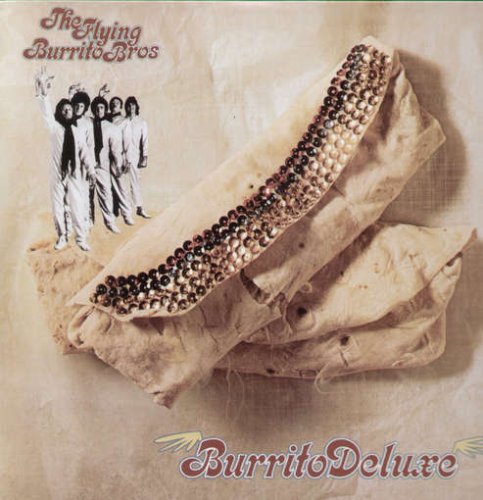
The Flying Burrito Bros, Burrito Deluxe (1970)


Less heavy-handed than the debut, it also weighs less, sometimes threatening to float away into jangly pop-rock—which is fine with me; frankly, I wish Parsons and Hillman both had taken more interest in that side of their work. GP had been kicking “Lazy Days” around for years before putting it on record here, and it sounds it—if Gilded Palace of Sin strove for the strains of 1938, this one eases into those of 1967. “High Fashion Queen” is sneering but effective, though the FBB—bros indeed—wallow in garden-variety rock misogyny that includes a zippy cover of Dylan's "If You Gotta Go," not one of his more charming moments.


They beat the Byrds to “Farther Along” by a year, though the two versions are largely interchangeable, and Parsons fumbles slightly on the closing “Wild Horses,” failing to bring Jagger’s depth of longing. Still, this brief excursion into a sort of power-pop country charts a direction not otherwise taken for this group--when Hillman dug "Down in the Churchyard" back out several years later on a solo album, it lumbered in at twice the length and half the impact. 

Sunday, October 27, 2013

Chris Hillman, Desert Rose (1984)


After the stupefyingly lackluster late-70s solo LPs, Hillman spent the first half of the 80s regrouping with some low-key albums of laid-back country ditties, mostly covers. Desert Rose has the casual feel of a hootenanny among friends, with longtime Hillman associates like Herb Petersen, Bernie Leadon, Al Perkins, et al., all having a good time dishing out solid background music. Nothing memorable here, but it’s all likable enough, and a dry run for the more polished pop-country of Hillman’s Desert Rose Band—which took not only the name, but also a spruced-up “Ashes of Love” rendition, from this. As questionable as the Nashville gloss would be in many cases, the fact is, Desert Rose shows how complacent Hillman had gotten, so the new band would also constitute something of a kick in the ass after his many years in the doldrums, of which this represents the end.

My $5 copy from Amoeba in Los Angeles is autographed; I have a hard time imagining anyone faking a Chris Hillman auto, so I’m going to assume it’s legit.


Monday, August 5, 2013

The Byrds, Younger Than Yesterday (1967)


Probably the only album in rock history in which a band recovers from a 3rd album slump by having the bass player take the lead songwriting role. What’s amazing is that Chris Hillman, for one record and one record only, very nearly fills Gene Clark’s shoes. “Have You Seen Her Face,” “Time Between,” Thought and Words,” they just roll out so seemingly effortlessly, pop-rock manna from four-string heaven. Throw in the slightly lesser (but still wonderful) “The Girl with No Name” and the Hillman/McGuinn co-written opener “So You Wanna Be a Rock ‘N’ Roll Star,” and this is Hillman’s greatest moment, a triumphantly jangly revitalization. Like floating garbage lifted by a rising tide, even David Crosby writes an actual song for once with “Renaissance Fair,” perhaps his finest turn.

This was probably the end of the line for this particular style of music; by the next year, you’d have to up your artistic ambitions or become the Monkees. It’s a delightful departure (I’m just gonna keep pretending Crosby’s “Mind Gardens” never happened).


Wednesday, July 24, 2013

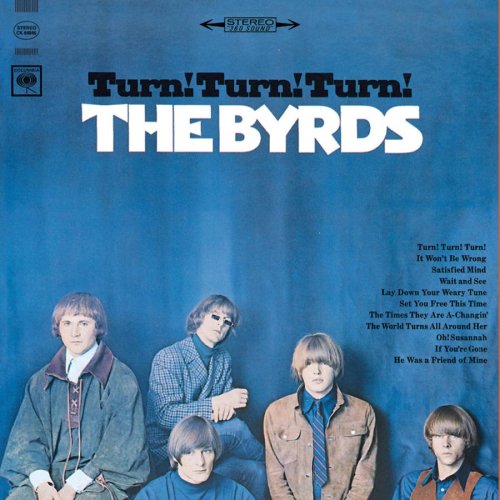
The Byrds, Turn! Turn! Turn! (1965)


Second verse, same as the first—to diminishing returns, but only slightly so. We still get revved-up Dylan covers (there’s no “please” in their command to get out of the new road in “The Times They Are A-Changin’”); splendid Gene Clark originals, all moody and brooding and yet possessed of lovely pop melodies; and scattered accoutrements that range from Porter Wagoner country hits to a few McGuinn stabs at pop-rock that aren’t half bad, the Herman’s Hermits to Clark’s Dylan-by-way-of-the-Beatles.

Nothing here is as game-changing as “Mr. Tambourine Man”—what within the Byrds framework could ever be again?—but the album takes on complicated (and problematic) weight as a last dying gasp of the American Camelot myth. The title track’s plea for peace would sound more desperate than prescient soon, and the expunged minstrel past of closing “Oh! Susannah” was a national repressed that was already returning (I won’t even go on a diatribe about Cold War bully John Kennedy, mourned in “He Was a Friend of Mine”; I’ll just sub in a link to Stephen Rabe’s compelling book The Most Dangerous Area in the World: John F. Kennedy Confronts Communist Revolution in Latin America). Anyone who takes this thing as pure simple pop music either votes Republican or hasn't listened very closely.

For all that baggage, and despite inexplicably leaving a few worthy Clark originals on the cutting room floor (“The Day Walk” is quite a loss), the thing hangs together, tenuously and anxiously jangle-rocking on the edge of oblivion. It already was too late, but maybe that was the point.


Wednesday, June 12, 2013

McGuinn-Hillman (1980)


I have no idea who opened for Loverboy or Eddie Money in 1980, but I do know, with absolute certainty, that they sounded exactly like this album: crisp ringing trebly guitar chords hanging in the air, faux-anthemic synth climbs to anticlimactic pseudo-crescendos, plenty of open space for live handclaps, and not a song in sight. Drowning out the sad, lazy all-filler tracks is the giant sucking sound of the now-absent Gene Clark, responsible for many of the best moments in the previous McGuinn-Hillman affairs. In his place are a nonsensically sequenced consecutive double whammy of Graham Parker tunes on side 1, a procession of farmed-out hack-written songs neither better nor worse than the former Byrds’s inert originals, and the grinding death throes of the promises of the 1960s. I guess this is what America deserved for electing Reagan.

Capitol seemed to know this one was slated for oblivion; as far as I can tell, between the front and back covers, the target audience for this LP was inattentive bikers impulse-buying based on the logo, sunburn victims, and barefoot survivalists surfacing from their fallout shelters to buy batteries.


Wednesday, June 5, 2013

The Souther-Hillman-Furay Band, Trouble in Paradise (1975)


Writing bland MOR rock must be more exhausting than it seems, because all these guys can squeeze their muses for is an average of three songs apiece, which really bleed together into one unbroken procession of musical, lyrical, and performance banality. Apparently Richie Furay was born again in the interim since the first SHF LP, so imagining the recording or the backstage of a show is vastly more entertaining than listening to the damn thing. Hillman nearly comes to life on “Follow Me Through,” buried deep on side two, but the arguable keeper is (as on round one) Souther’s “Mexico,” whose half-assed, shrugged-off tale of infidelity is an apotheosis of this scene’s darkness-free easy-sleazin’—not to mention a perfect embodiment of what Steely Dan was mocking in “Deacon Blues.”


Monday, May 20, 2013

Desert Rose Band, s/t (1987)


Anyone who hadn’t written Chris Hillman off by 1987 was delusional; the guy had by that point largely phoned in the last 15 somnolent years. So it’s startling to hear him spring back to life on this. The basic idea of the Desert Rose Band is Bakersfield classicism run though the glossy lens of 80s pop-country, and dubiousness of that formula notwithstanding, they nail it. Hillman writes vibrant originals for the first time in ages, and classic chestnuts like “Ashes of Love” are polished until they fit seamlessly alongside whatever Randy Travis singles were hot that year (recovering and overhauling Hillman’s Byrds gem “Time Between” is a particularly nifty trick). The reverence of the early Burrito Bros. is nowhere to be found—this group is out for hits, not some fetishized notion of authenticity—but that smiling shamelessness is exactly why it works.

Sunday, May 19, 2013

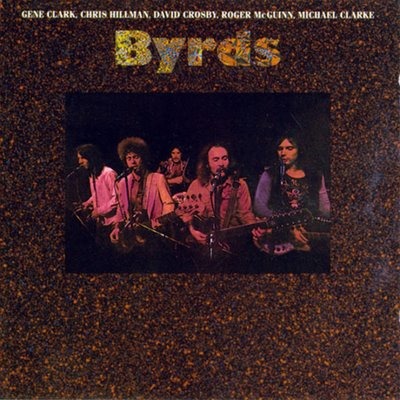
Byrds, s/t (1973)


The main thing a 1973 album featuring all five original Byrds (no "the" anymore, it seems) has going for it is low expectations; none of these dudes was near his prime by this point except for Gene Clark (and nobody seemed to care about him, inexplicably), so to hear this album rise to comfortable mediocrity is a pleasant surprise. That said, apparently nobody had lower expectations than the Byrds themselves, since most of them bring their scattered leftover songs rather than prime material, which they hoarded for their various solo pursuits. It’s like some unfortunate hybrid of the prisoner’s dilemma and the free rider problem.

It starts off strong, with Clark’s “Full Circle” (admittedly, recycled from his solo album Roadmaster, but given that that album only came out in, what, the Netherlands, I’ll call this fair) and another Clark tune on the first side; it’s smart enough to bury its two tuneless David Crosy atrocities on side two (one of which is also repeated, less excusably, from his own solo album of two years earlier). Chris Hillman gets two breezy little ditties that anticipate the effortlessly-forgettable Doobie Bros, and McGuinn even offers a decent folksy tune of his own (in addition to the bottom-feeding “Born to Rock’n Roll,” the sort of thing T-Rex did better but which should really not be done at all).

It’s rounded out by two Neil Young covers, bad ideas both. “Cowgirl in the Sand” comes at its most un-rocking, McGuinn’s claims notwithstanding, and while I understand the impulse to cover “(See the Sky) About to Rain,” truly one of the most beautiful songs in the Young songbook, not even Clark's vocals can top Young's own, and the band plays watered-down soft rock.

Why the back cover so emphasizes Hillman's splayed crotch, that I cannot say. 


Thursday, May 2, 2013

Gram Parsons/The Flying Burrito Bros., Sleepless Nights (1976)


For twelve songs squeezed out of a corpse, this isn’t half bad. Nine outtakes from the original Burrito Bros lineup in 1970 with Chris Hillman and the reliably dull Michael Clarke, and three Grievous Angels leftovers done with Emmylou Harris. It’s hard to ever dislike the Gram-and-Emmy Show—songs come and songs go, some better than others, but the two of them singing together sounds great regardless. There’s not an original composition in the bunch, but it’s freeing to hear GP stop striving for iconic status—always my least favorite aspect of his work—and just honky-tonk unto oblivion. Plus, the songs are well-chosen; why stop with one Merle Haggard tune when we can have two, the second of which is the perfectly plaintive death-row lament “Sing Me Back Home,” the album’s highlight? Otherwise, nothing here achieves classic status, but most of it falls just short. In a pinch, I’d probably take it over Grievous Angel.  


Friday, April 26, 2013

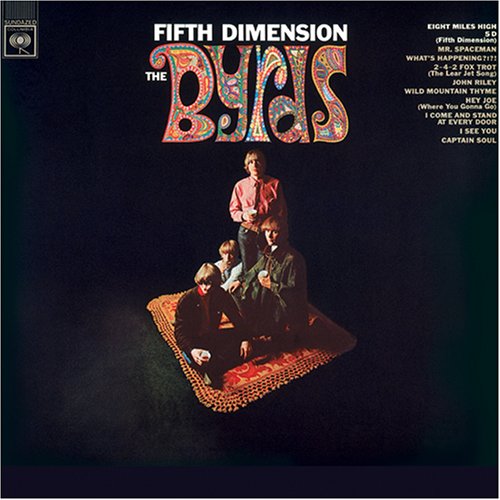
The Byrds, Fifth Dimension (1966)


When Roger (then still Jim) McGuinn explained in a 1965 interview that the Byrds were modifying folk music to “meet the nuclear expansion and jet age,” it sounded like a brilliant summation of the Zeitgeist. It turned out he just wanted to sing songs about airplanes; “2-4-2 Fox Trot (The Lear Jet Song)” here is just the first of many to follow. In its limp lethargy, it’s far from alone; I wouldn’t be the first to call Fifth Dimension a killer single with ten b-sides. If “Eight Miles High” was a departing gift from Gene Clark, his generosity was somewhat wasted. As the most heavily McGuinn-composed Byrds album to date, this reflected the hole at the center of the group. McGuinn has perilously little to say, and even padded out with covers and traditionals from “Hey Joe” to “John Riley,” the strain shows (his opening “5D (Fifth Dimension)” sounds like a Dylan cover, except with mushy roundabout lyrics). It could be worse, though—David Crosby’s debut solo songwriting credit “What’s Happening?!?!” anticipates decades of blathering pseudo-profundity from the insufferable Beat-aping man of boundless ego, but at least someone was smart enough to leave his equally tuneless “Psychodrama City” an outtake.

Credit where credit is due, though: McGuinn the songwriter ain’t much to marvel at, but his Coltrane-influenced guitar work, tested out a bit on “I See You” and then given full airing on “Eight Miles,” remains mindblowing. If only he had gone into some jazz-wonk underground instead of the bland rock that rendered him inert after this, unto eternity…


Sunday, April 21, 2013

The Flying Burrito Bros, s/t (1971)


The post-Parsons FBB fills his gap with future soft-rock maestro Rick Roberts—yet, instead of the expected sharp decline, it coalesces around a remarkably organic mellow cohesion that the first two lacked. Was Parsons a better songwriter? Yeah, probably (though Roberts offers more competition than you might expect based on his later Firefall sleepwalking). But Parsons always strained to cultivate his proto-urban-cowboy affect, whereas the lower-stakes Roberts songbook sounds like he’s actually been to Colorado on the song of that title. Chris Hillman takes a performing backseat, relegated to bass, but the four songs he co-wrote with Roberts have precisely the low-key appeal that Parsons, whatever his other merits, rarely achieved. Michael Clarke drums with the usual rote disinterest, but ghosts of Byrds past appear more vividly with the Gene Clark cover “Tried So Hard”—not first-class Clark material, but perfect for this album’s drowsy charm. If these guys had stepped out of the GP-shadows with a new band name, this one might be remembered for the soft gem it is, instead of being unfairly relegated to an imaginary aftermath.