Showing posts with label Gene Parsons. Show all posts

Tuesday, January 9, 2018

Elliott Murphy, Aquashow (1973)


Drumming for young Elliott Murphy was surely a good gig—the perks of 1970s major-label rocking being plentiful—so long as you weren’t looking for the limelight. Murphy barely pauses to breathe on his debut LP, bursting out of the gate with a feverish rush of wordplay and gloriously jumbled harmonica on “Last of the Rock Stars,” and while he later slows down, he never lets up. 

This is what Gene Parsons was made for: just try to keep up, and hold a steady beat. It had to be more interesting than late-Byrds work, and Parsons was never showy, but he knows how to sideman. When Elliott gets excited, rush a fill; when he’s dramatic, a stately downbeat; work in some accents on the verses to keep yourself occupied, he won’t notice or care.

It works perfectly. “Last of the Rock Stars” and “Hangin’ Out” are pop-rock masterpieces, and aside from a few dips into maudlinity and the excruciating ballad “Marilyn” (“she died for our sins,” natch), Aquashow is one of those great lost 70s albums, even, yes, Dylanesque at times (sneering Dylan, amphetamine-rush version). An ambling ex-Byrd truly couldn’t wish for more—aesthetically, at least; that other former Byrds drummer really stumbled into a soft-rock cash-cow with Firefall, but in the battle of cred, it’s Parsons all the way.
(Full disclosure: I've had this album for years, and only just noticed, while playing it and idly reading the back of the record, that it had a Byrds connection. So, voila!)


Saturday, April 5, 2014

The Byrds, Live at the Fillmore, February 1969 (2000)


No question  about it, I was a skeptic: the damn band put out a live record in 1970, so what’s the point of this beyond cynical label cash-grab?

And probably that was the point, since what else motivates labels? But that doesn’t stop this from asserting its own identity, independent of (Untitled), and capturing the band precisely at a transitional moment. It had only been four years since they broke big, but it seemed careers ago; they’re clearly eager to move beyond the past, cramming “Turn! Turn! Turn!”, “Mr. Tambourine Man,” and “Eight Miles High” into one oldies-hit-parade medley that they blast through in a ten-minute fury (as opposed to the sprawling side-long “Eight Miles” on the 1970 record). It works—while McGuinn is rarely an impassioned singer (to his frequent detriment), he shouts himself hoarse on a “So You Want To Be a Rock’N’Roll Star” that could nearly pass as a punk band in 1978, all clanging chords and John York swooping through on bass.

But the band wants to play its new material, and while the just-released Dr. Byrds and Mr. Hyde was hardly a high point, they rock “King Apathy III” as if it were, and almost convince. McGuinn’s vocals on the tracks that Gram Parsons would also claim separately (esp. “Sing Me Back Home” and “Close Up the Honky Tonks”) can’t help suffering in comparison, but he and the rest of the group seethe through a fantastic “This Wheel’s on Fire,” and close things out with more Dylan, a rousing “Chimes of Freedom.” Even the generally lackluster “He Was a Friend of Mine”—always one of my least-favorite Byrds songs, a treacly tread of misplaced nostalgia—comes to life. I still have no idea why both McGuinn and Parsons were so thin-skinned about being dissed by a DJ that they both kept “Drug Store Truck Drivin’ Man” in their sets, but at least it dies before the 2:30 mark. Even David Fricke’s liner notes deliver—the idea of the first Byrds show at the Fillmore, in 1966, occurring alongside a production of LeRoi Jones’ The Dutchman is just kind of astonishing—as is the fact that they were reduced to opening for some Butterfield Blues Band dudes by the point of this recording. Huh? 


Thursday, February 13, 2014

The Byrds, Dr. Byrds and Mr. Hyde (1969)


Clarence White is here, and he ain’t yer Sweetheart: he rings this LP in with some crashing chords that bring “This Wheel’s on Fire” closer to Blue Cheer than Gram Parsons. Later, fellow Byrd-n00b Gene Parsons adds such a cavernous drum sound to “Child of the Universe” that one might mistake it for a guest appearance from John Bonham. This is what happens when you repopulate a rock band in 1969, apparently. 

Dr. Byrds and Mr. Hyde is an odd, deeply uneven LP, lost in the shadows of 1968’s moment in the sun, and their biggest commercial dud, according to David Fricke’s reissue liner notes (which strive nobly, if futilely, to reclaim it as "the Great Forgotten Byrds Album"--it is one of those things, but not both). I’ve been listening to it every other year or so for a decade, and have only just begun to appreciate it, so I guess it’s what you’d call a grower. Still, it has its moments: “Old Blue” proves you can’t go wrong singing about a favorite dog, and “Bad Night at the Whiskey” is a great title for an anomalous outlier at the rockier end of the Byrds spectrum. There’s some dumb, lazy political commentary in “King Apathy III” and “Drug Store Truck Drivin’ Man” (a McGuinn/Gram Parsons co-write that the latter would also play, and also fail to bring to life), and I’m not sure why White and the new Parsons imported some of their Nashville West jamming, but all the confusing twists and turns do ultimately make for an unpredictable, if muddled, one-off experiment. Clunky as the title is, it captures the schizoid feel of this one. And that title-font, wow. 


Saturday, November 2, 2013

Nashville West (1976)


Before becoming Byrds, Clarence White and Gene Parsons bummed around the bar and studio session circuit for years, recording this live in 1968 but leaving it unreleased for about a decade. Hardly a lost treasure, it mostly shows a strong bar band belting out tight covers. Well-curated overall--their “Green, Green Grass of Home” stands nearly on par with the other Parson’s take, though “Greensleeves” is taking things a mite far, fellas—probably the most interesting interpretive trick is the way they dodge the sexual and gender roles of “Ode to Billy Joe” by turning in an instrumental rendition, with some terrifically bleary fretwork from White, a harbinger of things to come. For that matter, in a genealogy of the Byrds, probably the main point of interest here is the brawn, unfurled early on some crashing, crunchy chords that roll down over “Mental Revenge.” Here’s where the musculature of the late-period Byrds albums was developed, one set of handwashing-in-the-dirty-river workouts at a time.


Love that cover art, too.  

Monday, August 26, 2013

The Byrds, Ballad of Easy Rider (1969)


As a rule, albums whose second tracks are written by the new bass player about a dog and feature a mid-song drum solo are to be avoided at all costs. Yet somehow Ballad of Easy Rider proves an (most likely the) exception—and the best late-Byrds LP. McGuinn spends his entire songwriting capital on the lovely opening title track, one of his greatest moments, but the rest of the band steps up admirably, from short-term bassist John York and his aforementioned “Fido,” to co-writers Clarence White and Gene Parsons, whose “Oil in My Lamp” provides another high point. One could read the abundance of covers—there are a lot even by Byrds standards—as a sign of creative exhaustion, but they also reflect curatorial sense and wisdom, with “Tulsa County” and Woody Guthrie’s humane, still sadly relevant “Deportee (Plane Wreck at Los Gatos)” delivered with feeling. It’s a soft, understated record, all the better for not striving to be iconic.


Okay, McGuinn can’t hold back from ending things on another of his stupid spaceship songs, but even that brings a loopy charm.

Wednesday, July 3, 2013

The Byrds, (Untitled) (1970)


Untitled and also seemingly rather unsung, but a remarkably strong album with an adventurous format: double-LP, first one live, second new studio tracks. They bring the muscle for the live stuff, with a set spirited enough to reclaim even the doofy “Mr. Spaceman” from its 5th Dimension doldrums. “Lover of the Bayou,” one of McGuinn’s last strong originals, opens things—live rather than studio was the right call—and an entire sidelong “Eight Miles High” avoids feeling like one of those awful San Francisco jam bands stretching out aimlessly in some poor ballroom; these guys hammer ferociously.

The studio material contains more solid McGuinn/Levy compositions (“Just a Season” especially), and balances nicely against the live record. The Skip Battin/Kim Fowley songwriting machine that would irreparably mar the next two Byrds albums begins to seep in here, but is held slightly in abeyance by the fact that McGuinn takes the mic, and these actually sound like rock songs and not irritating novelty tunes—though the concluding “Well Come Back Home” drones on twice as long as it should.

That we're pretty far from "Mr. Tambourine Man" is signified by the brief two-minute rendition it gets, squeezed late on side 1--the Byrds could never escape their folk-rock origins, but they race through it to better move on to where they're now at. It's a better place than one would be primed to imagine.


Thursday, June 13, 2013

Parsons Green, Birds of a Feather (1988)


If you’re going to go the adult contemporary route, you might as well have the courage of your convictions. Closing an album with a four-minute a cappella “Quiet Joys of Brotherhood” (by Richard Farina/Sandy Denny), well, that counts. To get there, we listen through everything from Jimmie Rodgers to Donovan, all flattened into the same politely pleasant folk/country/bluegrass hybrid sway. Gene Parsons allows himself one homespun instrumental as on the solo LPs of old, and Meridian Green keeps herself restrained and kinda dull (her rare almost-guttural moments fall well short of what, say, Alannah Myles was doing at the time; feral, they are not). They seem pretty happy together—if you don’t pick that up from the cover, she’s “cooing like a dove/I’m so in love with you” on track 2 to remind you. Upon the release of this album, Lux Interior and Poison Ivy probably threw up on one another in protest.

Tuesday, June 4, 2013

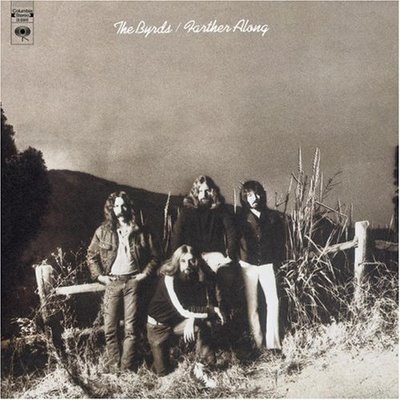
The Byrds, Farther Along (1971)


Timing and production, they matter: I could see this ramshackle album recorded on a four-track in 1996 getting some underground traction, and I could see it slathered in Byrdsmaniax overdubs, coming out in 2007 on Sub Pop as a Fleet Foxes opening act. Recorded near-live in 1971, right after the aforementioned flop, it too wilted on the vine. If not a lost masterpiece, it still deserved better, as Gene Parsons and Clarence White really showed themselves the center of the group, Roger McGuinn overcame his lifelong songwriting stupor to kick things off with the self-penned chugging 50s-style riffage of “Tiffany Queen” (one of the most overlooked Byrds gems, with even modestly clever lyrics from Our Man of the Norman Vincent Peale Reading Club), and the wretched Skit Battin/Kim Fowley songwriting duo pushed their obnoxiousness into relative remission here. We even get a moving dead-dog tribute.

Probably this was all they had in them and it’s just as well the road ended here (it’s the final LP in the organically continuous life of the Byrds, with the 1973 original-lineup return a reunion rather than a next-album). But the thing deserved better than the critical and commercial neglect it received—even the bonus tracks on the CD reissue kinda kill it.  


Saturday, June 1, 2013

The Byrds, Byrdmaniax (1971)


The near-universal consensus is that producer Terry Melcher killed this album by drowning it in sickly sweet strings and horns. Which gives him both too much and too little credit; okay, he lays it on thick, no question, but this was bound for mediocrity no matter who tweaked the knobs. Nothing could polish these tunes into gold, nor does Melcher entirely stifle what is there; McGuinn’s gentle but simple “Kathleen’s Song” was going to be endearing but forgettable whether or not swirling symphonic fills were crammed into its open spaces.

That and the Gene Parsons co-write “Pale Blue” are the fearless leader’s most—only—valuable contributions (the less said about his faltering stab at political commentary, “I Wanna Grow Up To Be a Politician,” the better; on his go-to co-composer Jacques Levy, let even less be said). Team Battin/Fowley can’t compete with even that, turning in more of the lazy pap that marked Battin’s Byrdsian contributions. Clarence White moves behind the mic for a few songs, credibly enough, though surely even the young Jackson Browne had better offerings for him to cover than “Jamaica Say You Will.”


At least they were smart enough to leave off the once-requisite Dylan cover that traded in and simplified the complicated sneer/sorrow combo of “Just Like a Woman” for a more straightforwardly sentimental version that thus missed the point.  Otherwise, all the markings of a slapdash contract filler are here, including the goofy, unappealing cover and title. Ladies and gentlemen, this is what uninspired journeyman rock music feels like.

Tuesday, May 28, 2013

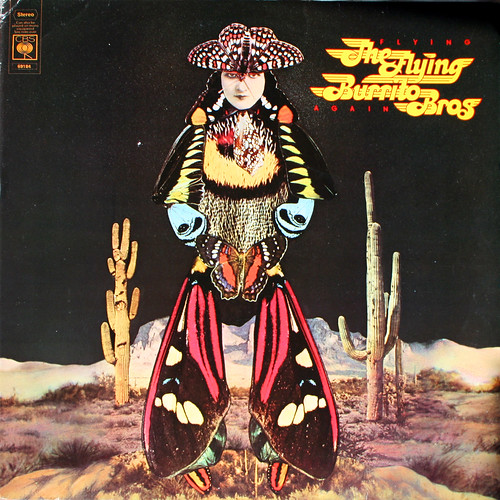
The Flying Burrito Bros, Flying Again (1975)


In their second or third (depending on how one defines it) configuration, stripped of the most crucial initial members, the FBB are basically a bunch of journeyman session dudes with no particular propensity for songwriting or distinct musical identity. The attenuated Byrds connection is down to Gene Parsons, probably the most credible writer of the bunch (his “Desert Childhood” comes closer to memorable than the rest of the album), even if, as Country Rock Blog notes, his status as one “G. Parsons” might have been his real ticket into the band. Nothing sticks out but nothing grates, right up until the terribly misguided decision to end things with a “Hot Burrito #3,” which reeks of such pathetic desperation, bottom feeding, and outright gravedigging that it can’t help but leave a sour taste as the final impression.

Tuesday, April 23, 2013

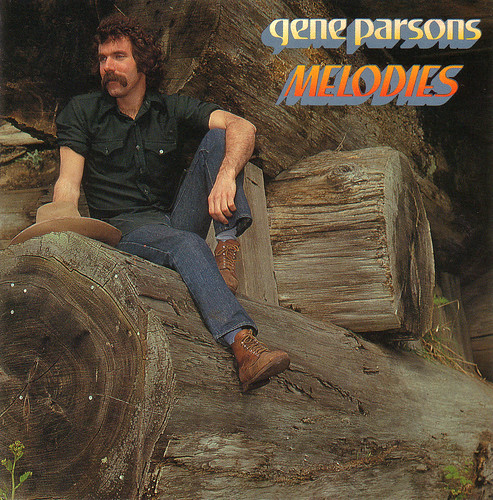
Gene Parsons, Melodies (1979)


With a title like that, you’d be forgiven for expecting some sort of swirling pop swell, all harmony vocals and lush hummable tunes. Instead, the first half offers the worst of both worlds: songs that are suffocated by the production, but still refuse to die (all four opening tracks crawl, rather interminably, past the four minute mark, and “Melodies of a Bird in Flyght” simply cannot bear the weight of its title--what could?). It sounds like the record label demanded a soft-rock hit, and Parsons didn't know what to do.  

The only surprise on the album comes when, after all that, things take a sharp midpoint swerve for the better. Parsons acquits himself well on a “Hot Burrito #1” rendition that has surely reduced lesser singers to rubble, and a few of his originals (“Little Jewels” especially) come close to qualifying as buried treasure—precisely the sort of thing you’re hoping for when you flip to side two of a record by the Byrds’ late-period (but best) drummer. I haven’t the slightest idea what a Gene Parsons show was like, but I picture him playing dinner clubs in marinas, modest and unassuming but every now and then silencing the house with something pretty. And lest that sound dismissive, let me be clear: his solo albums are better than McGuinn’s or Hillman’s, hands down.  

Tuesday, April 9, 2013

Gene Parsons, Kindling (1973)


Surely I am not the only one who spent several years listening to the Byrds entirely unaware of Gene Parsons's existence on the presumable grounds that it subconsciously registered as a typographical error conflating Gene Clark and Gram Parsons. I'm not even sure I was entirely disavailed of that slip until side 2 of this record, his solo debut. It was in the Byrds bin for two bucks, that was as much reflection as I gave it.

Parsons drummed for the post-Sweethearts Byrds, and while skepticism toward solo albums by drummers is generally well warranted (and toward late-period Byrds even more so), damned if the other GP doesn’t deliver a winner, a smartly understated, often lovely folk excursion, largely self-penned and –played. He opts for consistency over standout moments, so the absence of big songs is testament not to failure but success; that said, the side-two opening sequence of “Sonic Bummer” and “I Must Be a Tree” trumps pretty much anything other non-Clark/that-GP ex-Byrds were doing in 1973. A hidden gem of the Byrds catalog, though he may be overplaying the rustic card on that cover.

Sunday, March 31, 2013

The Flying Burrito Bros, Airborne (1976)


The sole point of interest here is the head-scratcher question of how a group of scraggly, skeevy, second-tier country-rockers managed to convince Stevie Wonder to take time off from his astonishing run of 1970s albums to sit in on piano for an inert rendition of his own “She’s a Sailor.” Otherwise, it’s modest, unremarkable stuff through and through. The Byrds presence has doubled from the last LP; Gene Parsons is now joined by Skip Battin, meaning the Burrito Bros have now perversely replicated the earlier band’s personnel shifts of the last decade, with the Hillman/Gram Parsons/Clarke lineup giving way to the late-Byrds rhythm section—and the accompanying decline in quality. I suspect this also speaks to the insularity of the mid-decade country-rock scene; apparently Richie Furay was busy this year. But it’s all harmless enough, and they seem to be having fun, so it’s as difficult to resent this as it is to remember it ten minutes later.